




Keir Starmer has resigned as Britain’s prime minister and as leader of the Labour Party, saying he has “heard the answer” from his party on whether he is best placed to lead them into the next general election and “accepts that answer with good grace.”
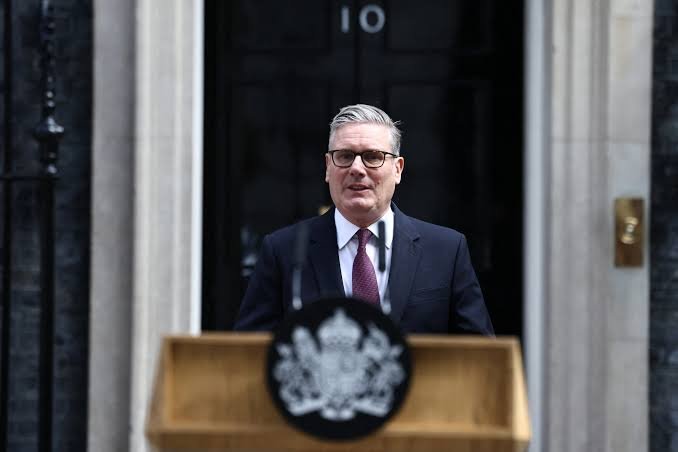
Speaking outside 10 Downing Street on Monday, Starmer confirmed his resignation in what he described as an emotional address.

He announced: “I will resign as leader of the Labour Party,” adding that every decision he had made in office was guided by the need to “putting the country I love first.”
Starmer said he had informed King Charles earlier in the day about his decision to step down and had asked the Labour Party’s national executive committee to establish a leadership timetable, with nominations opening on July 9 and concluding before the summer recess.
This schedule, he said, would ensure a new leader is in place before parliament resumes in September. Until then, he said he would remain in office as prime minister and ensure a smooth transition of power.
“I will do everything to ensure an orderly handover of power, and will give my successor full support,” he added.
Following his announcement, Starmer left Downing Street with his wife to applause and cheers from supporters, reflecting on his time in office.
“Walking up Downing Street two years ago was the proudest moment of my life,” he said, adding that he inherited a party that was “politically, financially and morally bankrupt,” and insisted he had worked to deliver reforms aimed at improving the lives of millions.
READ ALSO:
- Tinubu Accuses Opponents of Creating Hunger, Poverty at Kaduna Rally
- Military Tanks, Personnel Deployed at Abuja City Gate Ahead of Obi-Kwankwaso Mega March
- Zlatan Unveils Traditional Wedding Photos
- Okoya Family Disputes Fatai’s Firstborn Claim, Reveals Benefits Received
- Macron Postpones Nigeria Visit Amid Protests, Unrest in France
Looking ahead, Starmer said he planned to focus on his family life, saying he would now be “the best husband and dad” to his “fantastic wife” and “beautiful children.”
Starmer became prime minister in July 2024 after leading Labour to a landslide general election victory, ending 14 years of Conservative rule following Rishi Sunak’s resignation. The win made him the UK’s sixth prime minister in a decade.
However, his popularity reportedly declined within two years amid public dissatisfaction over unmet campaign promises. The Labour government also faced setbacks in local elections and rising support for Reform UK, led by Nigel Farage.
Poll ratings for Starmer also fell sharply, dropping below those of his predecessor, Rishi Sunak. In recent weeks, his leadership faced mounting pressure, including resignations within his government and calls from more than 70 Labour MPs urging him to step down.
Although he initially rejected calls to resign, saying it would “plunge the country into chaos,” he eventually stepped down as pressure intensified.
Attention has now turned to Andy Burnham, who is expected to be sworn in as MP for Makerfield following his by-election victory last week. He is widely being positioned as a potential successor and could become Britain’s next prime minister if chosen.
If confirmed, Burnham would become the UK’s seventh prime minister in 10 years.