



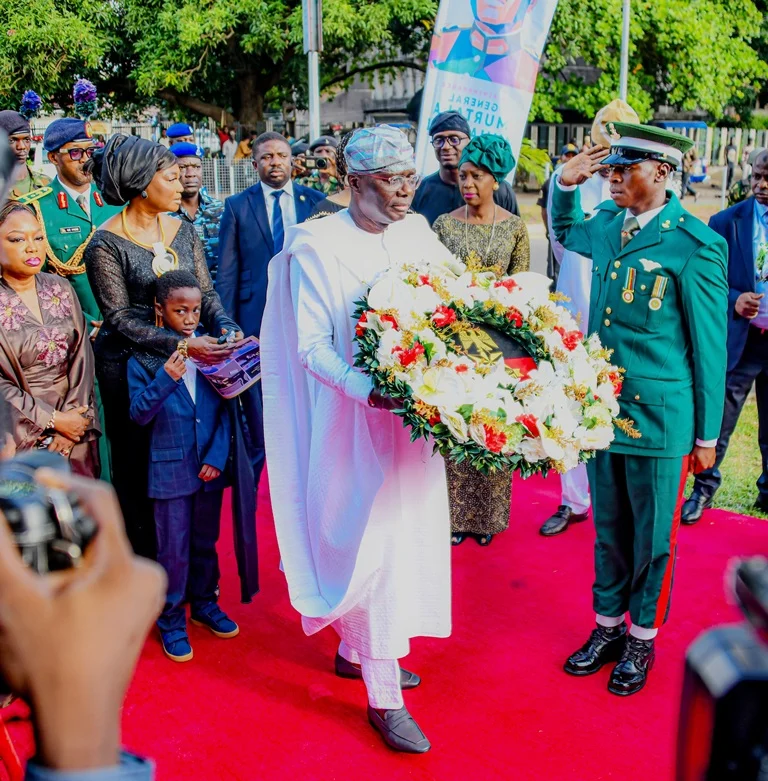

Governor Babajide Sanwo-Olu of Lagos State joined dignitaries on Friday to commemorate the 50th anniversary of the passing of late General Murtala Ramat Muhammed, GCFR, in a solemn wreath-laying ceremony at the leader’s cenotaph in Ikoyi.
The event brought together notable figures, including Senator Daisy Danjuma, wife of retired Lt. General Theophilus Danjuma; Dr. Aisha Muhammed Oyebode, daughter of the late General and CEO of the Murtala Muhammed Foundation; her husband Gbenga Oyebode; and Hon. Bola Oladunjoye, Chairman of Ikoyi-Obalende LCDA, alongside other officials and dignitaries.

During the ceremony, wreaths were laid at the cenotaph to honour General Muhammed’s life and enduring contributions to Nigeria.
General Murtala Muhammed served as Nigeria’s Head of State from July 1975 until his assassination on 13 February 1976. Despite his brief seven-month tenure, his administration is remembered for transformative reforms, including the reorganisation of the civil service, the creation of new states, anti-corruption initiatives, and efforts to return the nation to civilian rule.
READ ALSO:
- NCDC Approves N100,000 Weekly Support for Ebola Contacts in Isolation
- Ruth Kadiri Urges Couples to Resist Pressure of Extravagant Weddings
- NDLEA Arrests South African Woman With 36.65kg Cocaine at Lagos Airport
- Atiku Faults Tinubu for Blaming Opposition Over Nigeria’s Economic Hardship
- Regina Daniels Mocks Bloggers After Confrontation Video With Mother Goes Viral
He assumed power following a bloodless coup that ousted General Yakubu Gowon, but his leadership was tragically cut short when his convoy was ambushed in Ikoyi, Lagos, resulting in his death alongside his driver and aide-de-camp. Leadership then passed to his deputy, Lieutenant General Olusegun Obasanjo, who carried forward the transition plan that eventually restored democratic governance.
The 50th anniversary of General Muhammed’s death has been marked across February 2026 with exhibitions, policy discussions, memorial gatherings, and wreath-laying events, reflecting on his significant legacy in Nigeria’s history.