




The Federal Government has announced December 2028 as the target date for the complete transition from analogue to digital television broadcasting in Nigeria.
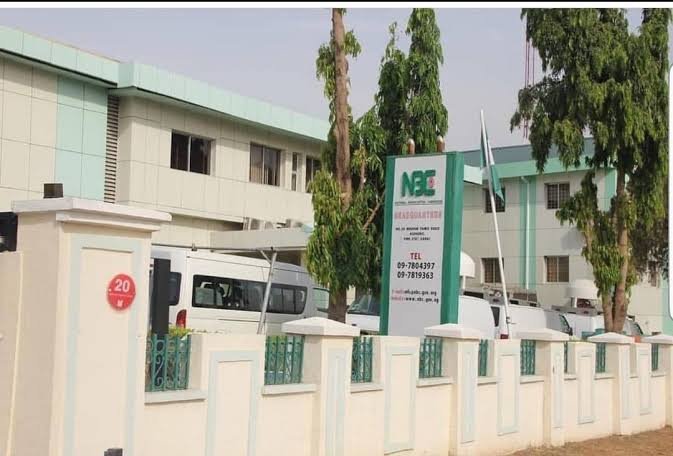
The Director-General of the National Broadcasting Commission (NBC), Charles Ebuebu, revealed this during an interview with the News Agency of Nigeria (NAN) in Abuja on Tuesday.

Ebuebu said the deadline would mark the final phase of the country’s analogue switch-off, adding that several measures would be implemented before the transition is completed.
“We put a timeline for analogue switch-off. Before that time, a lot of things will be put in place. This is just phase one,” he said.
The NBC director-general explained that future stages of the digital transition would focus on areas such as pay-TV services, studio upgrades, and establishing dedicated production centres for content creators.
He also disclosed that progress was being made on audience measurement, with a proof-of-concept exercise already carried out in about 7,000 homes in Lagos, while implementation had started in Abuja.
Ebuebu said the commission would unveil details of the various phases after consultations with major industry stakeholders, including the Broadcasting Organisation of Nigeria (BON), to ensure their support.
He noted that ending analogue broadcasting would release valuable spectrum space for other sectors, describing the resource as a key national asset.
READ ALSO:
- How Badejo-Okusanya Began Her First Day As NBA President
- Abuja Hospital Suspends Kidney Transplant Services Over Organ-Harvesting Probe
- Super Eagles Get Dates For 2027 AFCON Qualifiers Against Madagascar, Guinea-Bissau
- Nollywood Actress Atinuke Kareem Dies After Battle With Breast Cancer
- Four Family Members Die As Three-Storey Building Collapses In Kwara
According to him, the recovered spectrum would undergo professional valuation before being allocated to sectors such as telecommunications, application services and financial technology companies.
“I won’t put a sum to it, but it is valued upwards of about 50 billion dollars. Consultants will determine its actual value before allocation,” Ebuebu said.
On outdated broadcasting equipment, the NBC boss said the commission was working on a policy framework guided by expert recommendations and international standards.
He added that the Digital Switch Over White Paper requires broadcasters to separate content creation from transmission, with signal distribution to be managed by providers such as NIGCOMSAT.
Ebuebu said some obsolete analogue equipment could be reused where possible, while the government would be engaged to manage assets that cannot be repurposed in order to reduce environmental risks linked to industrial waste.