



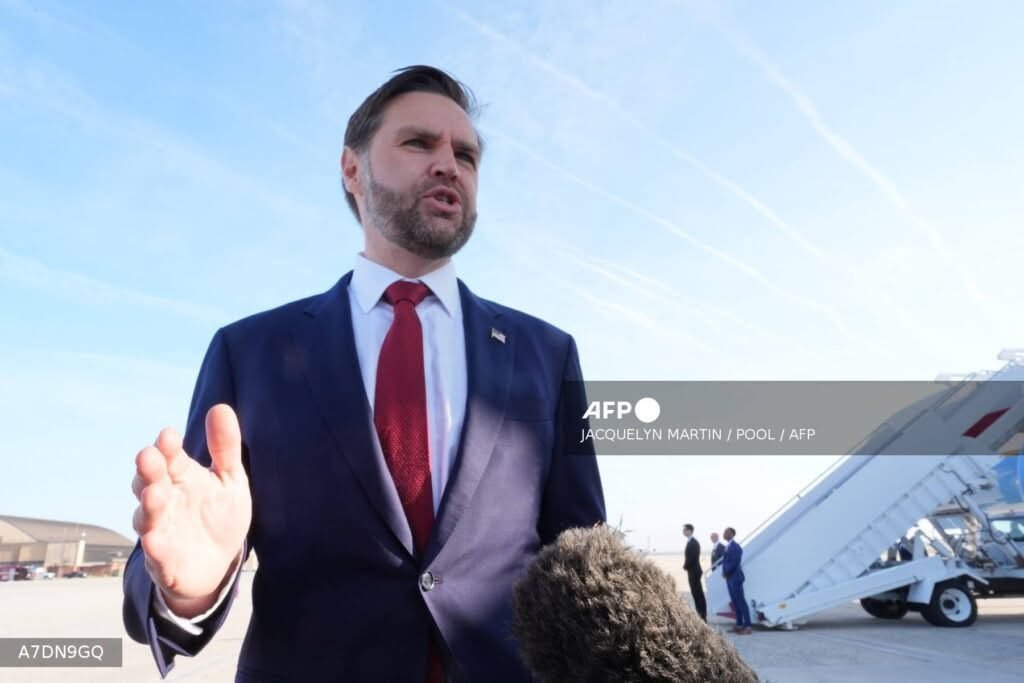

High-level negotiations between the United States and Iran aimed at ending the ongoing Middle East conflict ended without a breakthrough, as US Vice President JD Vance confirmed that both sides failed to reach an agreement after extended talks in Islamabad.
Speaking after nearly 21 hours of discussions, Vance said Washington had presented what he described as its “final and best offer” to Tehran, stressing that the US is seeking firm assurances that Iran will not develop nuclear weapons.

“We leave here with a very simple proposal, a method of understanding that is our final and best offer. We’ll see if the Iranians accept it,” he said.
He noted that despite the high-level engagement — the most significant between both nations since the 1979 Islamic Revolution — Iran had yet to provide the “fundamental commitment” being demanded.
“We haven’t seen that,” Vance added.
The talks, hosted by Pakistan, come amid a temporary pause in hostilities, with Washington earlier announcing a two-week halt to attacks alongside Israel to allow room for diplomacy.
Pakistan’s Foreign Minister, Ishaq Dar, said his country would continue to support dialogue between both nations.
“It is imperative that the parties continue to uphold their commitment to ceasefire,” he said, adding that Pakistan would “continue to play its role to facilitate engagement and dialogue… in the days to come.”
READ ALSO:
- CAF Awards 2026 To Hold In Lagos
- Burna Boy, IGP Disu Explore Ways To Improve Police-Public Relations
- I Ended The Relationship After Discovering He Was Married – Actress Irewole Olaniyan Spills
- ECOWAS To Deploy Youth Observers For Nigeria’s 2027 Elections
- Madonna University Expels Nursing Student, Suspends 14 Over Viral TikTok Video
However, Iranian state media indicated that the negotiations were hindered by what it described as “unreasonable demands of the American side,” though officials also acknowledged that reaching a deal in a single session after weeks of conflict was unlikely.
The war, which began on February 28 following coordinated strikes by the United States and Israel on Iran, has significantly destabilised the region and disrupted global oil markets.
US President Donald Trump maintained a firm stance during the talks, suggesting that Washington had already achieved its objectives militarily.
“Whether we make a deal or not makes no difference to me. The reason is because we’ve won,” Trump said.
A major sticking point in the negotiations remains Iran’s nuclear ambitions, alongside broader geopolitical issues including sanctions relief and ongoing conflicts involving Israel and Hezbollah.
Tensions have also centred on control of the Strait of Hormuz, a critical global oil route. While the US military reported deploying warships to secure the passage, Iranian forces denied any American presence and warned of consequences if such movements occur.
Iranian parliamentary speaker Mohammad Bagher Ghalibaf expressed deep scepticism about the process, citing past failed engagements with Washington.
“Our experience in negotiating with the Americans has always been met with failure and broken promises,” he said.
Despite the deadlock, diplomatic efforts are expected to continue, with both sides under pressure to prevent further escalation in a conflict that has already triggered widespread economic and humanitarian concerns.