




The long-anticipated Nigeria–Morocco gas pipeline project is expected to reach a major milestone this year, as plans are underway to sign an intergovernmental agreement among participating countries.
Amina Benkhadra, Director-General of Morocco’s National Office of Hydrocarbons and Mines (ONHYM), disclosed that the agreement will pave the way for the creation of a joint authority in Nigeria, involving representatives from 13 countries to coordinate policy and regulation.

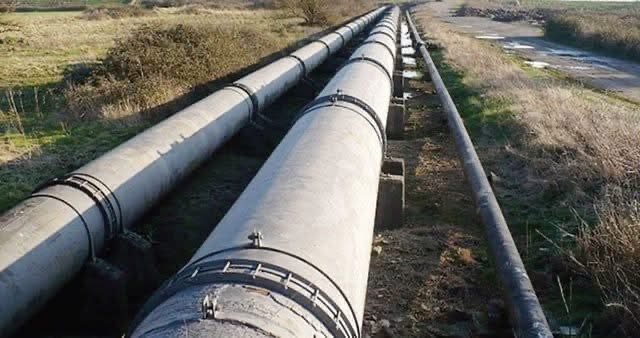
The project, also known as the African Atlantic Gas Pipeline, is a 6,900-kilometre network designed to transport up to 30 billion cubic metres of gas, with part of the supply expected to serve Morocco and extend to European markets.
Benkhadra noted that key preparatory stages, including feasibility studies and front-end engineering design, have already been completed, with strong backing from the Economic Community of West African States.
She added that ONHYM and the Nigerian National Petroleum Company plan to establish a joint venture company in Morocco to oversee construction, financing, and implementation.
The pipeline is expected to enhance regional integration by boosting power generation and supporting industrial development across West Africa.
According to Benkhadra, the project will also strengthen Morocco’s role as a strategic energy link between Africa and Europe, with initial connections planned for Mauritania, Senegal, Ghana, and Côte d’Ivoire before extending to Nigeria’s gas reserves.
READ ALSO:
- CAF Awards 2026 To Hold In Lagos
- Burna Boy, IGP Disu Explore Ways To Improve Police-Public Relations
- I Ended The Relationship After Discovering He Was Married – Actress Irewole Olaniyan Spills
- ECOWAS To Deploy Youth Observers For Nigeria’s 2027 Elections
- Madonna University Expels Nursing Student, Suspends 14 Over Viral TikTok Video
She said the first phase of gas delivery is projected for 2031, noting that the project will be executed in stages rather than relying on a single global investment decision.
“The project does not rely on a single global final investment decision,” she said.
She further explained that the phased approach allows each segment to function independently, accelerating development and early returns.
“The project is attracting strong interest due to its scale, its phased structure, and its strategic positioning,” she added.
While funding arrangements are still being finalised, she confirmed that the project will combine equity and debt financing.
The development comes as Nigeria also continues discussions on the Trans-Sahara Gas Pipeline, another major initiative aimed at supplying natural gas to Europe through North Africa.