



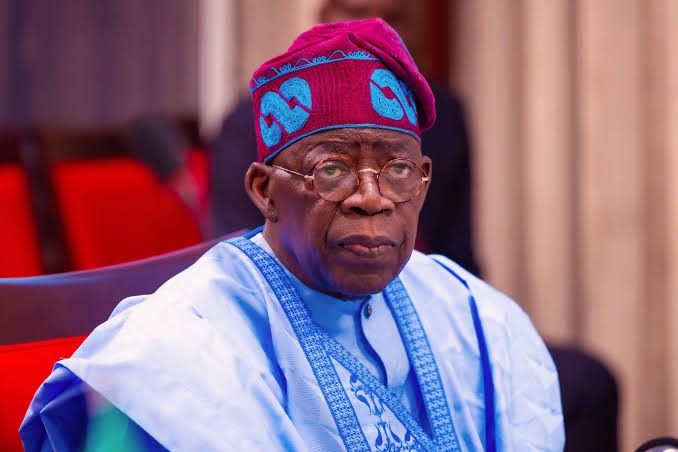

President Bola Tinubu has defended his administration’s backing of the Dangote Refinery, saying Nigeria could have been pushed into a serious energy crisis due to ongoing global conflicts without local refining capacity.
He made the remarks on Thursday on the sidelines of the 13th Africa CEO Forum in Rwanda, stressing that Nigeria’s population and heavy reliance on petroleum products made domestic refining a national priority.

“Today, with the crisis around the whole world. particularly around conflict, Nigeria wouldn’t be able to survive, over 200 million people, without a refinery,” he said.
Tinubu explained that supporting local refining projects was a deliberate strategy to strengthen the country’s energy security and reduce dependence on imported fuel.
“A risk-taker like the Dangote Refinery must be encouraged by the government in power. What I did was support him, give him free trade for his own licence, and support him in his efforts to source the crude that is necessary. Today, he is the exporter of both the PMS, aviation fuel,” he added.
The president’s comments come amid rising global tensions, particularly in the Middle East, where conflicts and disruptions around key oil-producing and shipping routes have continued to affect global crude supply and fuel prices.
READ ALSO:
- Tope Alabi Issues Legal Warning Over Alleged False Publications
- One Dead, Three Injured as Two-Storey Building Collapses in Lagos
- Umahi: Lagos-Calabar Coastal Highway May Stall if Tinubu Loses 2027 Election
- NLC, TUC Give FG Until Tuesday to Address Workers’ Demands
- Actor Francis Duru Passes Away
The instability has led to volatility in international energy markets, with several countries reassessing their energy security strategies and reducing reliance on imported refined petroleum products.
The Dangote Refinery, owned by billionaire industrialist Aliko Dangote, recently began fuel production as part of Nigeria’s broader effort to end decades of dependence on imported refined products.
The facility is also expected to ease pressure on foreign exchange demand and strengthen Nigeria’s long-term energy independence.