




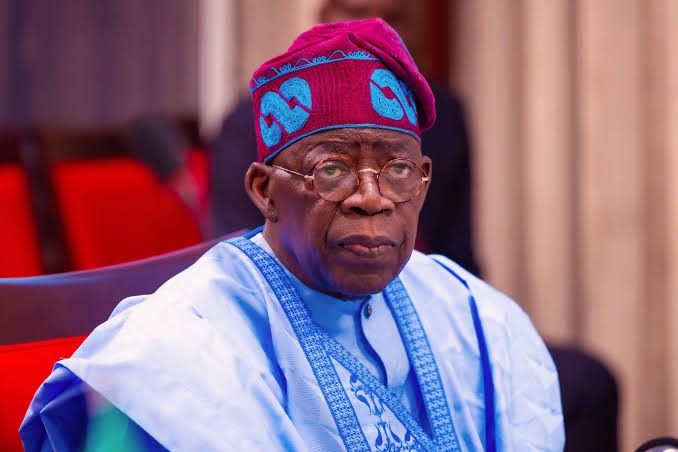

President Bola Tinubu has inaugurated a Presidential Task Force on Ebola Virus Disease preparedness and approved the immediate release of N10 billion to strengthen Nigeria’s emergency health response system amid a renewed outbreak in parts of Africa.
The outbreak, which has spread across the Democratic Republic of Congo and Uganda, has reportedly killed at least 349 people. The World Health Organisation has also declared it a Public Health Emergency of International Concern.

According to a statement by the Special Adviser to the President on Information and Strategy, Bayo Onanuga, the task force will be led by the Chief of Staff to the President, Femi Gbajabiamila, with members drawn from key ministries, agencies, and state governments.
The approved N10 billion intervention fund, he said, is aimed at boosting the preparedness capacity of the Nigeria Centre for Disease Control and Prevention (NCDC) and strengthening national emergency response systems.
The task force was constituted after a high-level meeting convened by Gbajabiamila to assess Nigeria’s readiness, with stakeholders including officials from the Ministry of Interior, FAAN, Nigeria Immigration Service, NCAA, and the Lagos State Government.
Onanuga explained that the President has ordered enhanced surveillance at all international airports, including intensified temperature screening, crowd management measures, and closer monitoring of passengers arriving via high-risk routes.
Tinubu also directed that “passenger screening at all international airports, including enhanced temperature checks and crowd-control protocols,” be strengthened, alongside “enhanced monitoring of passengers arriving on high-risk airline routes.”
The directive also includes airlines such as Air Uganda, RwandAir, Air Tanzania, Air Angola, Kenya Airways, and Ethiopian Airlines, which operate routes connected to affected regions.
The President further ordered the activation of isolation and referral centres at Lagos and Abuja international airports, while mandating QR code-based health declaration systems for travellers from high-risk countries.
He also instructed the disinfection of airport facilities, including departure halls, baggage areas, and cargo terminals as part of preventive measures.
READ ALSO:
- NCDC Approves N100,000 Weekly Support for Ebola Contacts in Isolation
- Ruth Kadiri Urges Couples to Resist Pressure of Extravagant Weddings
- NDLEA Arrests South African Woman With 36.65kg Cocaine at Lagos Airport
- Atiku Faults Tinubu for Blaming Opposition Over Nigeria’s Economic Hardship
- Regina Daniels Mocks Bloggers After Confrontation Video With Mother Goes Viral
In addition, Tinubu directed that specific airports or terminals be designated for high-risk flights to allow stricter screening procedures and reduce contact with other passengers.
He also called for consultations with aviation, diplomatic, and security authorities on possible restrictions or regulation of flights from affected countries.
The President further directed state governments hosting international airports and border corridors, alongside relevant agencies, to submit their preparedness and funding plans for coordinated implementation.
Health authorities say the current outbreak is linked to the Bundibugyo virus strain of Ebola, first detected in Ituri Province, DR Congo, on May 15, 2026, before spreading to Uganda after a case was confirmed in Kampala.
Reports from health agencies indicate hundreds of confirmed cases, with many patients currently in isolation as efforts continue to contain the spread.
Unlike previous Ebola strains, there is currently no approved vaccine or specific treatment for the Bundibugyo variant, though early supportive care remains critical in reducing fatalities.
Nigeria previously experienced Ebola cases in 2014, when 20 infections and eight deaths were recorded following the arrival of an infected Liberian-American, Patrick Sawyer, at Lagos airport.