




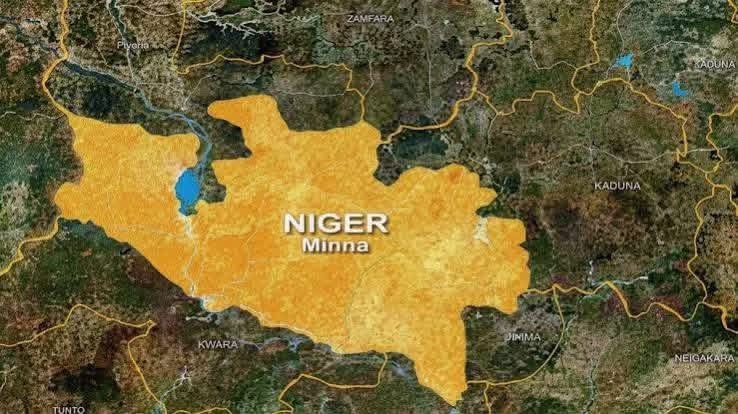

A federal government investigative panel has attributed the deaths of 37 suspected illegal miners held by the Nigeria Security and Civil Defence Corps (NSCDC) in Minna, Niger State, to asphyxiation, a condition in which the body does not receive sufficient oxygen.
The chairman of the 10-member committee, Jonathan Kure, disclosed the finding on Tuesday while submitting the panel’s report to the Minister of Interior, Olubunmi Tunji-Ojo, in Abuja.

The committee was established on September 19 following President Bola Tinubu’s directive for a comprehensive and transparent investigation into the incident.
Tunji-Ojo had announced the formation of the panel in a statement that also listed 21 NSCDC officers suspended in connection with the deaths.
The incident occurred after the corps arrested the suspected illegal miners during operations around Mohammed Inuwa Wushishi Estate in Minna on September 15 and 16.
The Niger State NSCDC Commandant, Suberu Aniviye, had earlier said in a statement that several detainees were found dead in the early hours of Thursday following what he described as a suspected disease outbreak.
The federal government subsequently suspended the state commandant and ordered an investigation to establish the circumstances surrounding the deaths.
The panel was initially expected to submit its findings earlier but requested an additional two weeks on October 6 to complete its work.
READ ALSO:
- Probe Uncovers Cause of 37 Suspected Miners’ Deaths in Niger
- Tinubu Asks Senate to Approve $20.5bn, €1.04bn External Loans
- 2027: Zion Ministry Founder, Backs Hamzat, Seeks Protection for Igbo Businesses in Lagos
- Harry Kane Wins 2026 Ballon d’Or
- Lagos Begins Installation of Boundary Signposts to Curb Community, State Disputes
Speaking at a press briefing in Abuja, Kure said members of the committee visited Minna and examined the detention facility where the victims had been held.
He added that the investigation involved conducting autopsies, obtaining statements from NSCDC officers, survivors, relatives of the deceased and other witnesses, as well as gathering documentary and forensic evidence.
According to Kure, the panel’s preliminary findings also pointed to institutional shortcomings and excessive zeal by some officers involved in handling the case.
He stressed the need for improved professionalism in the management of sensitive cases, particularly those involving the detention and welfare of suspects in custody.