



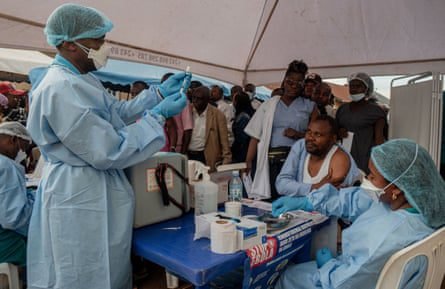

The Federal Government has confirmed an Ebola case in the Federal Capital Territory following the diagnosis of a woman who recently travelled to Nigeria from Uganda on an international flight.
The Coordinating Minister of Health and Social Welfare, Prof. Muhammad Ali Pate, announced the development in a statement on Tuesday, October 20, 2026, after laboratory tests confirmed the infection.

According to Pate, the woman had spent several days receiving treatment at a private hospital in the FCT before the disease was confirmed. She has since been placed in isolation, where she is receiving medical care.
The minister disclosed that contact tracing was underway, with 44 people who had close contact with the patient identified so far. Public health officials are also working to locate and monitor others who may have been exposed, including healthcare workers, patients, caregivers and travel contacts.
Pate said the Federal Ministry of Health and Social Welfare, the Nigeria Centre for Disease Control and Prevention (NCDC), the FCT Health Services Secretariat and other relevant agencies were coordinating efforts to contain the infection and prevent further transmission.
He added that surveillance had been strengthened, while the private hospital where the woman was treated was receiving immediate assistance to improve infection prevention and control.
The minister urged healthcare facilities across the country, both public and private, to remain vigilant and promptly report suspected cases.
He advised health workers to maintain a high level of suspicion, identify and isolate suspected patients without delay, follow strict infection prevention and control procedures, and notify public health authorities immediately when necessary.
Explaining how the disease spreads, Pate said Ebola could be transmitted through direct contact with the blood or other body fluids of an infected person who is ill or has died from the disease. Contact with contaminated materials can also lead to infection.
He emphasised that an infected person could not transmit the virus before symptoms appeared.
The minister encouraged Nigerians to maintain regular hand hygiene and avoid contact with the body fluids of anyone suspected of having Ebola. He also urged people to look out for symptoms such as fever, severe weakness, headache, vomiting and diarrhoea, particularly if they might have been exposed to the virus.
Pate advised anyone who believed they had been exposed to report to public health authorities immediately, even if they felt well. Those who develop symptoms were urged to avoid close contact with others and seek guidance from public health officials before visiting a healthcare facility.
READ ALSO:
- Adeboye Visits Costa Rica President
- FG Confirms Ebola Case in Abuja, Begins Contact Tracing for 44 People
- Why Lagos Won’t Borrow to Build Fourth Mainland Bridge — Hamzat
- Afenifere Leader Reuben Fasoranti Dies at 100
- DSS Arraigns Five Suspects Over Abduction of 20 NYSC Prospective Corps Members in Imo
He also called on members of the public to cooperate with contact tracing teams, including airline passengers who may be contacted as part of the investigation.
The minister cautioned against circulating unverified information or stigmatising people who may have been exposed to the infection.
Pate noted that Nigeria had successfully contained an Ebola outbreak in 2014, adding that the country had the experience and public health infrastructure required to respond to the latest case.
However, he stressed that preventing further spread would depend on early detection, prompt reporting and public cooperation.
He said the Federal Government, the FCT authorities and their partners would continue to provide updates through the Presidential Taskforce on Ebola Virus Disease and the NCDC.
Nigerians seeking further information or wishing to report suspected cases were advised to contact the NCDC through its toll-free number, 6232, which operates 24 hours a day, seven days a week.