



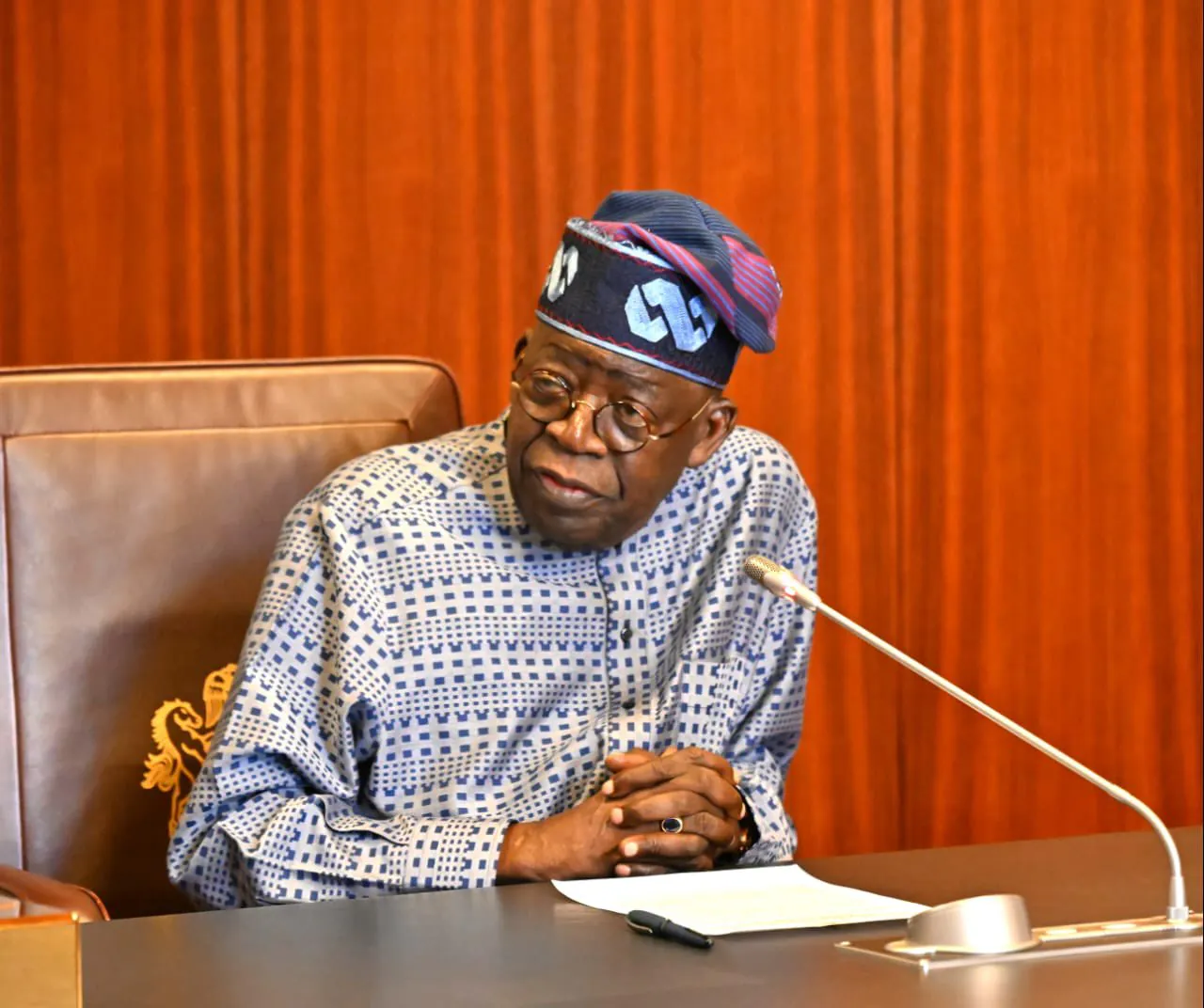

President Bola Tinubu has revealed that he took up several jobs, including driving a taxi, to finance his university education in the United States.
The president disclosed this in a personally signed statement on Wednesday, explaining how his experiences as a student in America influenced his administration’s education policies and ongoing reforms.

His remarks came a day after the Minister of Education, Tunji Alausa, described him as a genius, saying he graduated with a first-class degree in Accounting from Chicago State University (CSU).
Reflecting on his early years in the US, Tinubu said his educational journey was challenging, as he had to work and save money before he could begin his studies.
He recalled that financial difficulties forced him to delay his university admission while working to raise enough money for his education.
“When I first arrived in the United States as a young man, I drove a taxi to earn money for my education. I even had to postpone starting school for several months to save enough,” he said.
“When I eventually got to Chicago, I worked different jobs to support myself and pay my way through university. I know what it means to worry about tuition, accommodation and how to make ends meet while pursuing an education.”
According to the president, those experiences strengthened his conviction that every Nigerian child should have access to quality education, irrespective of their family background or financial circumstances.
He highlighted several education initiatives introduced by his administration, describing the sector as a major component of his government’s priorities.
Tinubu disclosed that the Nigerian Education Loan Fund (NELFUND) had disbursed more than N372bn in loans to students to cover institutional charges and living expenses.
READ ALSO:
- ACT Foundation Convenes Africa’s Leaders for Annual Breakfast Dialogue on Youth Enterprise and Ecosystem Building
- Tinubu: I Drove Taxi, Took Several Jobs Before Graduating in US
- Four Nigerian-Americans Win Elective Positions In US Midterm Elections
- Sterling Bank, Aké Festival Put Africa at the Centre of AI Debate
- Access Holdings to Advance Africa’s Capital Mobilisation Agenda at AFIS 2026
He also said the government’s technical and vocational education programme had received over 2.8 million applications.
On infrastructure, the president stated that 38 technical colleges had been renovated, while students in federal and selected state technical institutions now enjoy free tuition, accommodation, textbooks and uniforms.
Tinubu further referenced the agreement reached with the Academic Staff Union of Universities in January, which includes a 40 per cent salary increase for academic staff and provisions aimed at improving stability in the university system.
Emphasising the need for students to graduate within the stipulated period, he said, “A four-year course must take four years. Our young people deserve to complete their education on time and get on with their lives.”
On medical education, the president revealed that approximately N110bn had been committed to renovating 24 medical schools.
He added that annual nursing admissions had increased from 28,000 to 115,000, while enrolment in medical and dental programmes had grown from 5,000 to 12,000.
“Nigeria needs more doctors, nurses and other healthcare professionals, and we must build the capacity to train them here at home,” he said.
OUR CHILDREN MUST KNOW WHERE WE ARE FROM
Tinubu also disclosed that more than one million out-of-school children had returned to classrooms through interventions by his administration.
He listed teacher development, improved access to education for girls and the introduction of a revised national curriculum that incorporates Nigerian history into classroom learning among the government’s other initiatives.
Explaining the importance of restoring history to the school curriculum, the president said, “Our children must know where we have come from, understand the country they belong to, and be prepared to take responsibility for its future.”
He praised the Minister of Education, Tunji Alausa, Minister of State for Education, Suwaiba Sa’id Ahmad, and other members of the education team for their contributions to the reforms.
The president also highlighted the development of an interactive A–Z platform for the Nigeria Education Sector Renewal Initiative, designed to provide information on government policies, programmes, achievements and opportunities within the education sector.
He urged parents, students, teachers and other Nigerians to visit edu4pbat.ng to learn about available opportunities and support programmes.
Tinubu encouraged citizens to use the platform to understand the benefits available to them and report challenges affecting education in their communities.
He maintained that access to education should not be determined by a child’s circumstances at birth, adding that his administration remained committed to expanding opportunities for young Nigerians.
“We have more work to do, and I am determined to see it through,” he said.