




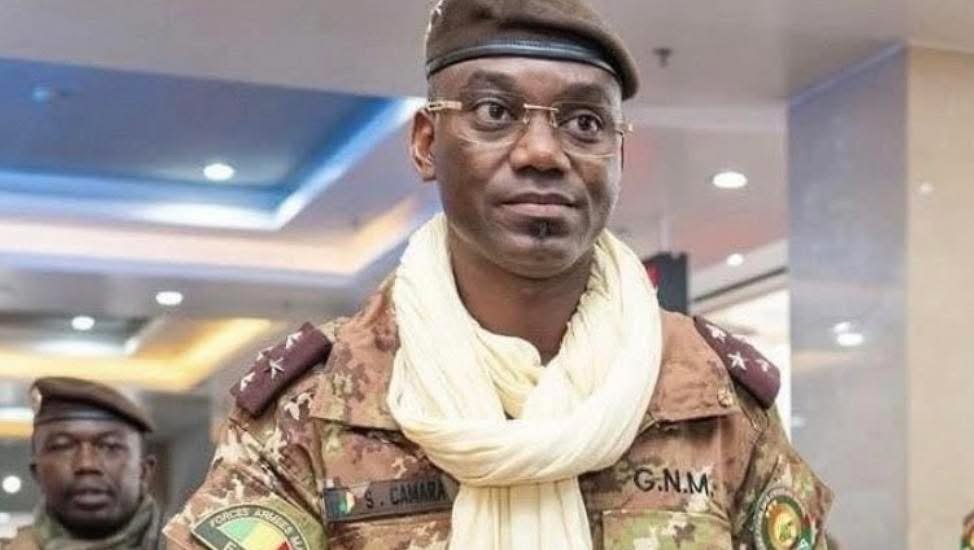

Sadio Camara, Mali’s defence minister, has been killed following a series of coordinated attacks targeting military locations across the country.
Camara reportedly died after a vehicle-borne explosive detonated outside his residence in Kati, a heavily guarded military town located about 15 kilometres from Bamako, the nation’s capital. The town also houses interim leader Assimi Goita and other members of the ruling junta.

The incident occurred on Saturday as jihadist groups with links to al-Qaeda, alongside Tuareg rebel fighters, launched simultaneous assaults on multiple strategic locations, including the military stronghold in Kati.
Reports indicate that a suicide car bomb destroyed the minister’s residence, killing him and at least three members of his family.
Camara was a key figure in Mali’s military leadership, which took control after successive coups in 2020 and 2021.
The attack comes amid a renewed surge in violence across the country. In northern Mali, clashes reportedly resumed early Sunday in the town of Kidal.
Meanwhile, Mohamed Almaouloud Ramadane, spokesperson for the Front for the Liberation of Azawad, disclosed that an arrangement had been reached involving Azawad fighters and Russian Africa Corps personnel to allow a safe withdrawal from active combat zones.
READ ALSO:
- Tinubu Accuses Opponents of Creating Hunger, Poverty at Kaduna Rally
- Military Tanks, Personnel Deployed at Abuja City Gate Ahead of Obi-Kwankwaso Mega March
- Zlatan Unveils Traditional Wedding Photos
- Okoya Family Disputes Fatai’s Firstborn Claim, Reveals Benefits Received
- Macron Postpones Nigeria Visit Amid Protests, Unrest in France
“Early this morning an agreement was reached between the Azadian forces and the Russian elements of the Africa corps to guarantee their safe withdrawal from fighting,” he said.
“In other words, several fighters from the GATIA de Gamou led, in particular, by Salam Ag Abanassa, have malfunctioned.
“Finally, elements of the Malian army retrenched in the former MINUSMA camps are currently under sustained strikes aimed at forcing them to leave their bunkers.”