



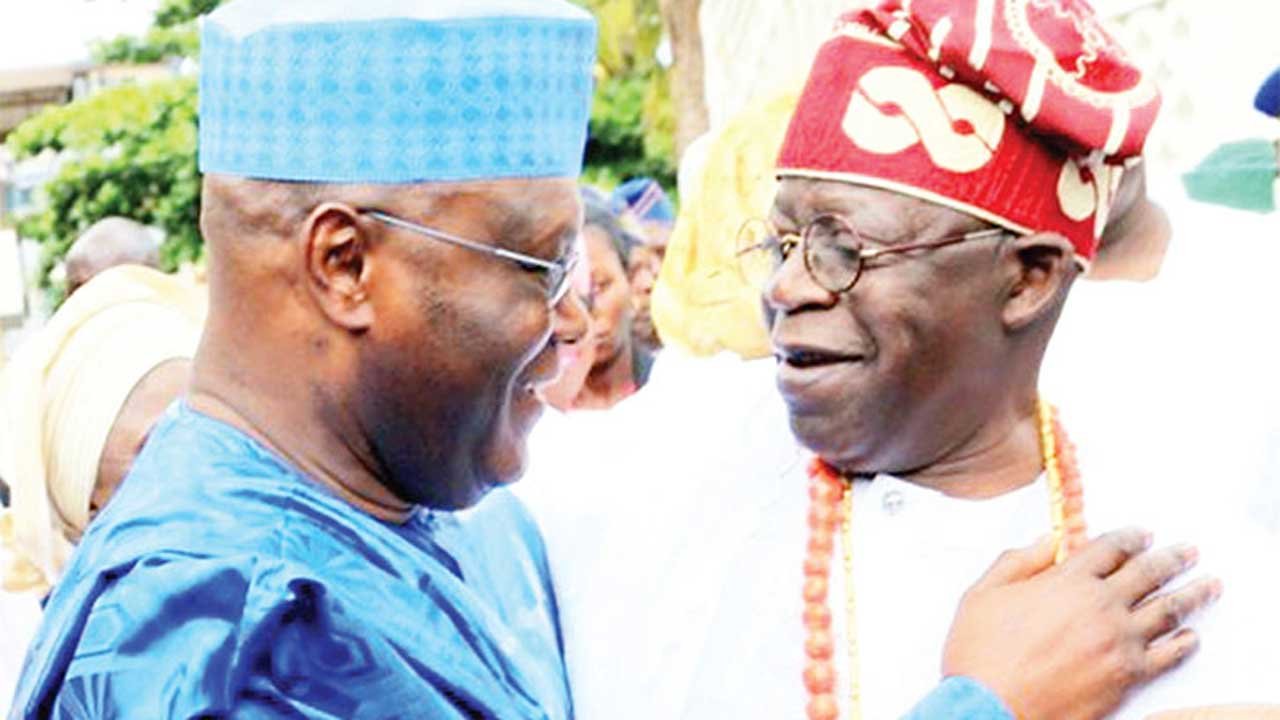

Presidential candidate of the African Democratic Congress (ADC), Atiku Abubakar, has dragged President Bola Tinubu before the Federal High Court in Abuja over an alleged forgery of his National Youth Service Corps (NYSC) discharge certificate.
Atiku, alongside the ADC, filed the suit on Friday, asking the court to disqualify Tinubu from contesting the 2027 presidential election. The All Progressives Congress (APC) and the Independent National Electoral Commission (INEC) were joined as defendants.

The former Vice-President personally visited the court registry to depose to an affidavit supporting the case, saying the suit concerns the constitutional requirements for occupying the office of president.
Atiku and the ADC are challenging Tinubu’s eligibility under the 1999 Constitution, as amended, and the Electoral Act, 2026.
A major part of their case centres on Section 137(1)(j) of the Constitution, which provides that a person is not qualified to contest for president if they present a forged certificate to INEC.
In the affidavit, the plaintiffs alleged that the NYSC certificate submitted to INEC bears the name “Tinubu Bola Adekunle”, which they contend differs from the President’s name, Bola Ahmed Tinubu.
They are asking the court to determine whether Tinubu and the APC should be excluded from the 2027 presidential election if the allegations are established.
The plaintiffs are also seeking an order compelling INEC to release Tinubu’s Form CF001 submitted for the 2023 and 2027 presidential elections.
READ ALSO:
- Atiku Faults Tinubu for Blaming Opposition Over Nigeria’s Economic Hardship
- Regina Daniels Mocks Bloggers After Confrontation Video With Mother Goes Viral
- Davita Reveals How Her Love Story With Zlatan Began
- Tinubu Accuses Opponents of Creating Hunger, Poverty at Kaduna Rally
- Military Tanks, Personnel Deployed at Abuja City Gate Ahead of Obi-Kwankwaso Mega March
They said Atiku had previously requested certified true copies of the relevant documents but had not received them before the suit was filed.
Explaining his decision to personally depose to the affidavit, Atiku said the case goes beyond ordinary political disputes.
“I came here personally because the issues before the court go to the heart of our constitution and the integrity of the office of president,” Atiku said.
“I have therefore put my name, my signature and my oath behind the facts we are presenting to the court. Now it is President Tinubu’s turn to answer them.”
The suit also challenges provisions of the Electoral Act, 2026, which the plaintiffs argue could restrict pre-election challenges to a candidate’s qualification.
According to the plaintiffs, the National Assembly cannot enact legislation that overrides an express constitutional provision. They want the court to determine whether the restrictions contained in the Electoral Act can prevent them from relying on Section 137(1)(j).
Atiku and the ADC are consequently seeking an order disqualifying Tinubu and the APC from participating in the 2027 presidential election on the grounds contained in the suit.
The ADC candidate said the matter should be determined through legal proceedings rather than political arguments or speculation on social media.
“We are not asking Nigerians to decide this matter on social media, and we are not asking INEC to become a court,” he said.
“We are asking the institution holding the records to produce them and the judiciary to examine the evidence and pronounce on it.”
Counsel to the plaintiffs, Senior Advocate of Nigeria Edwin Inegedu and Joseph Onu Silas, said they were confident in the case after examining the relevant constitutional and electoral provisions.
Silas said the suit could also provide an opportunity for the judiciary to clarify aspects of Nigeria’s electoral law.
“We are confident that justice will prevail. This case presents an important opportunity to further develop Nigeria’s electoral jurisprudence,” he added.