




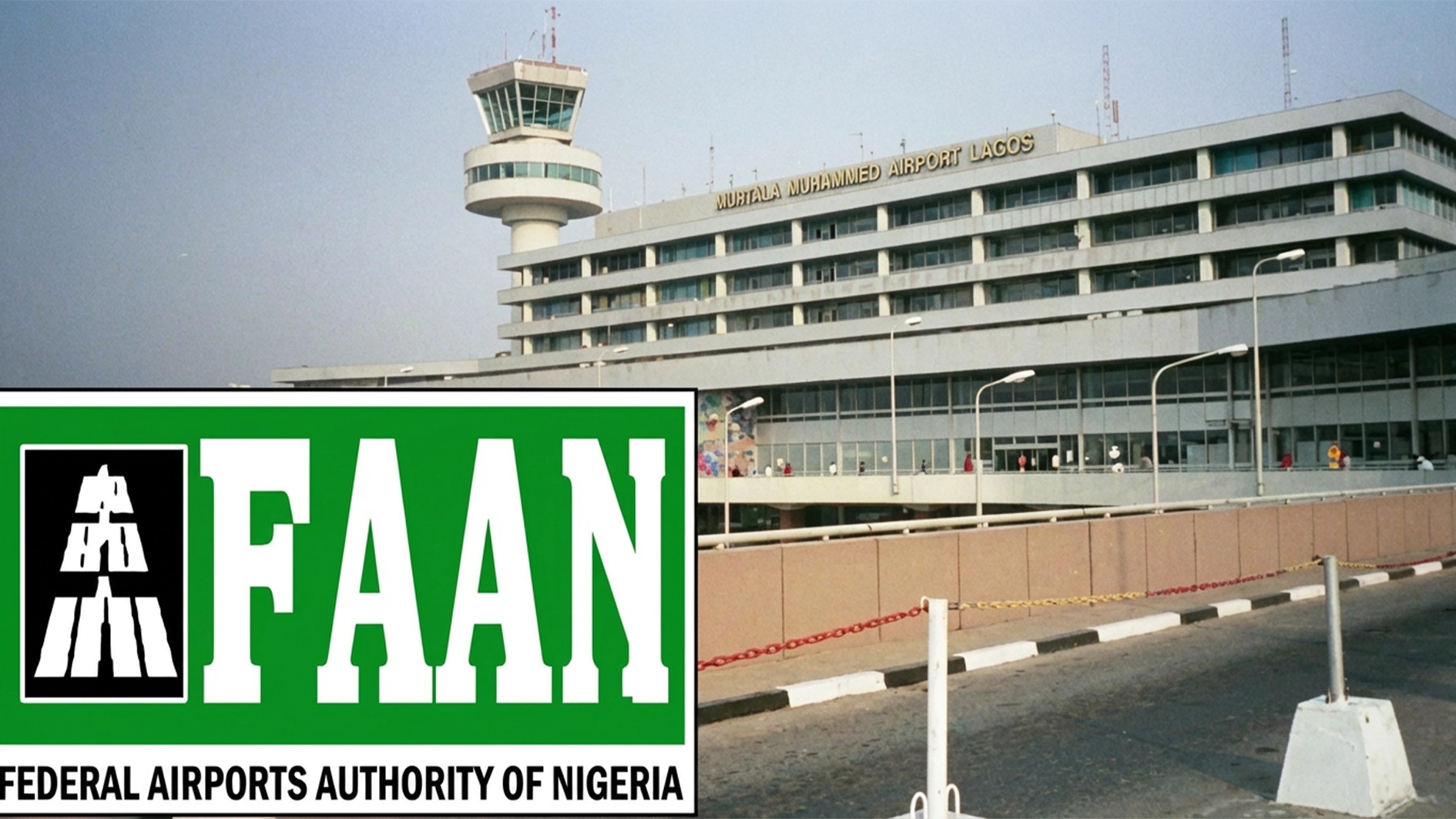

The Federal Airports Authority of Nigeria has clarified that the N30,000 taxi fare recently linked to journeys from the Murtala Muhammed International Airport in Lagos was not a new rate introduced by the agency.
FAAN made the clarification in a statement issued on Thursday by its Director of Public Affairs and Consumer Protection, Henry Agbebire, following criticism from passengers over the cost of airport transportation.

The controversy gained attention after travel content creator Chris Joondeph, popularly known as Authentic Travelling, shared a video showing a quoted fare of N30,000 for a trip from the Lagos airport to the Radisson Hotel in Ikeja.
However, fares for the same journey were reportedly much lower on e-hailing platforms. A check by PUNCH Online showed a N6,900 fare on another platform, while Uber quoted N4,200 for UberX and N5,800 for its Priority service.
Addressing the issue, FAAN explained that the airport taxi rates being discussed had been in existence before the introduction of its Airport Car Hire Rank Management System, known as ACHRAMS.
“It is also important to clarify that the fares highlighted in some of the recent public discussions were not rates newly imposed by FAAN or created by ACHRAMS,” the authority said.
“Airport taxi fares have existed independently of the application, and the rates themselves were not substantially different from those previously applicable.”
READ ALSO:
- NLC General Secretary Ugboaja Passes Away
- FAAN Explains N30,000 Lagos Airport Taxi Fare Amid Public Backlash
- Canada Commends NiDCOM For Diaspora Conference Success
- 2027: Accord’s Hashim Unveils Plan To Cut Petrol Price To ₦605
- Ogogo’s Family Debunks Report That Daughter Welcomed Baby Boy
FAAN said ACHRAMS was introduced to improve the monitoring and transparency of authorised airport car-hire services rather than determine how much passengers should pay.
“What ACHRAMS introduced was greater visibility and transparency around the prevailing airport-taxi rates, making the cost more readily apparent to passengers,” it said.
The authority acknowledged that the availability of cheaper fares through e-hailing platforms such as Uber and Bolt had made the difference in prices more noticeable to passengers.
“FAAN recognises, however, that the comparison with the lower fares passengers had become accustomed to through e-hailing platforms understandably heightened public concern,” it stated.
The clarification comes alongside FAAN’s announcement that it has resolved its operational differences with Bolt, allowing the e-hailing company to resume services at airports managed by the authority.
FAAN said its move to improve the management of commercial transportation at airports was driven by longstanding concerns, including passenger solicitation, touting, random pick-ups, unregulated operators and related safety, security and accountability issues.
The authority also maintained that it was not seeking to restrict competition within the airport transportation sector.
“FAAN supports healthy competition and does not seek to create or promote a monopoly in airport transportation,” it stated.