




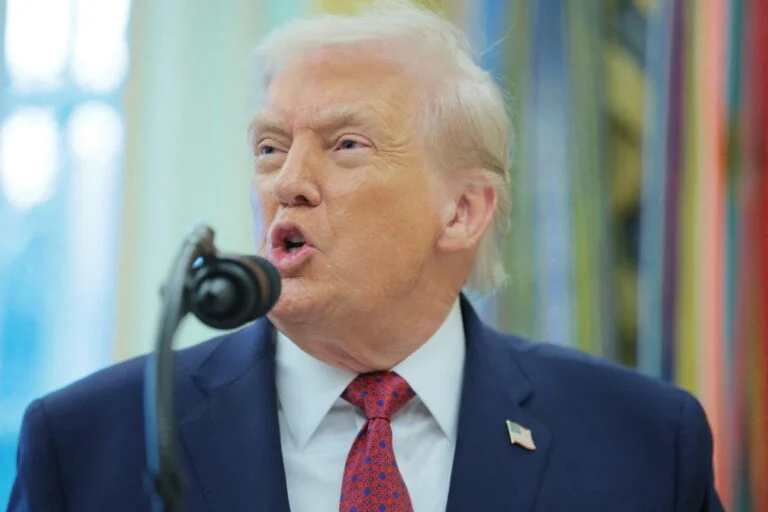

The United States has placed Nigeria on a list of countries facing partial travel restrictions, citing concerns over security and visa documentation.
The White House announced the updated presidential proclamation on Tuesday, which details countries under both full and partial travel bans.

Nigeria is among 15 nations, mostly in Africa and the Caribbean, subjected to partial restrictions. Others include Angola, Antigua and Barbuda, Benin, Côte d’Ivoire, Dominica, Gabon, The Gambia, Malawi, Mauritania, Senegal, Tanzania, Tonga, Zambia, and Zimbabwe.
The White House explained that Nigeria was added due to the operations of radical groups in certain regions, saying that “radical Islamic terrorist groups such as Boko Haram and the Islamic State operate freely in certain parts of Nigeria, which creates substantial screening and vetting difficulties.”
The US also highlighted visa compliance issues, noting that “according to the Overstay Report, Nigeria had a B-1/B-2 visa overstay rate of 5.56 percent and an F, M, and J visa overstay rate of 11.90 percent.”
In contrast, Turkmenistan, previously on the list, was removed after demonstrating “significant progress in improving its identity management and information-sharing procedures.”
READ ALSO:
- 2027: D’Banj Presents Three Sienna Buses To Osun Politician
- Olu Jacobs’ Funeral: Family, Friends, Colleagues Gather In Lagos
- Public Servants To Begin Three-Day Nationwide Warning Strike Friday
- NYSC Members Among Victims Abducted On Owerri-Onitsha Road — Police
- Hamzat Vows To End Illegal Levies If Elected Lagos Governor
Meanwhile, the Sahelian countries of Burkina Faso, Mali, and Niger were placed under full travel restrictions, alongside South Sudan and Syria. The White House cited ongoing threats from terrorist organizations as the reason. Existing full restrictions continue for nationals of Afghanistan, Burma, Chad, Congo, Equatorial Guinea, Eritrea, Haiti, Iran, Libya, Somalia, Sudan, and Yemen. Laos and Sierra Leone, previously under partial restrictions, have now been moved to full restrictions.
Regarding the updated travel bans, the White House stated, “It is the President’s duty to take action to ensure that those seeking to enter our country will not harm the American people.” It added that the restrictions are meant to prevent entry by foreign nationals about whom the US lacks sufficient information to assess risks, enforce immigration laws, and support counterterrorism objectives.
Earlier in June, President Donald Trump signed an executive order imposing full travel bans on 12 countries and heightened restrictions on seven others. Nigeria was not included in those initial lists, but concerns increased recently amid allegations of religious persecution and secessionist movements, which gained traction among some US lawmakers and advocacy groups.