





The Federal Government has said the Dangote Petroleum Refinery would not have been commercially viable if Nigeria had continued with the petrol subsidy regime, arguing that subsidy removal was necessary to create room for private investment in refining.
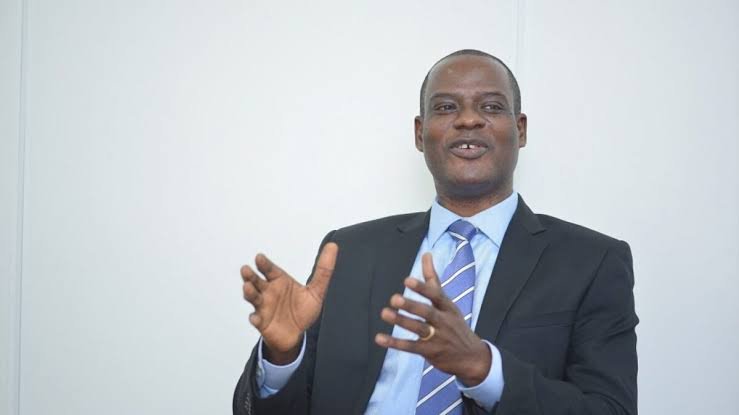
The Minister of Finance and Coordinating Minister of the Economy, Taiwo Oyedele, made the disclosure on Wednesday in Abuja while presenting the government’s “Nigeria’s Reform Scorecard: The Benefits, Costs and Harms Prevented.”

Oyedele acknowledged that the removal of the petrol subsidy and the unification of the foreign exchange market had imposed significant financial pressure on Nigerians. However, he maintained that the reforms helped prevent a deeper economic crisis and created conditions for investments such as the Dangote refinery to operate.
He argued that the refinery could not have competed effectively if petrol had remained heavily subsidised at less than N200 per litre.
“Remember, we’re importing refined products. That is to say the Dangote refinery wouldn’t have been able to start because you can’t sell at N200 per litre and queue up for the government to pay the balance of over N1,000 per litre,” Oyedele said.
According to the minister, maintaining a low official petrol price would not necessarily have guaranteed availability. He said Nigeria could instead have experienced severe shortages, forcing consumers to purchase petrol from the black market at significantly higher prices.
“What I will say is what the counterfactual shows. On the pre-reform path, petrol would likely be simultaneously unavailable. It would still be N185 per litre. It would not be available at the official price and is likely to be trading in the black market for at least N3,000 per litre,” he said.
Oyedele said a privately operated refinery producing petrol at its actual cost would have struggled to compete with subsidised imports under the former system.
READ ALSO:
- Tope Alabi Issues Legal Warning Over Alleged False Publications
- One Dead, Three Injured as Two-Storey Building Collapses in Lagos
- Umahi: Lagos-Calabar Coastal Highway May Stall if Tinubu Loses 2027 Election
- NLC, TUC Give FG Until Tuesday to Address Workers’ Demands
- Actor Francis Duru Passes Away
He also pointed to the government’s financial position at the time, saying it would have been increasingly difficult to continue financing the subsidy while meeting other obligations.
“The same government was already spending nearly 100 per cent of its revenue just to service debts and print a lot of money. Just imagine what could have been,” he said.
The minister said foreign exchange shortages had further weakened the sustainability of the subsidy regime, noting that the country had limited access to dollars needed to finance petroleum imports.
“With the naira simply unavailable at any official rate for most Nigerians and businesses, we were running out of dollars. Our net external reserves were about $3bn, while we were owing over $7bn,” he said.
“That is bankruptcy. And you know we can’t print dollars because we’re not the United States of America. What that means is, even to buy fuel, Nigerians would have been paying over N3,000 to buy a litre.”
He added that petroleum marketers would eventually have struggled to continue importing products under a system where they sold petrol at a subsidised price and waited for government reimbursement.
The Dangote refinery began selling petrol in September 2024, when petrol was trading at around N500 per litre. Although the subsidy was officially removed in May 2023, the government had continued to direct the Nigerian National Petroleum Company Limited to import petrol and sell it below cost.
As the Dangote refinery increased domestic petrol production, the government subsequently ended the implicit subsidy, resulting in pump prices rising above N1,000 per litre.
Oyedele said the reforms generated N15.8tn in additional resources for the federation between June 2023 and December 2025. Of the amount, N5.4tn went to the Federal Government, N6.5tn to the states and N3.9tn was distributed among the 774 local governments.
He explained that the savings were not recorded under a specific Federation Account category labelled “subsidy savings”. Instead, the gains were reflected in increased naira revenues from oil and non-oil sources following the exchange-rate adjustment and removal of the implicit foreign exchange subsidy.
The Federal Government also recorded N3.1tn in additional independent revenue during the period, largely from remittances and surpluses generated by government-owned entities.
Oyedele said the government borrowed N11.9tn between June 2023 and December 2025, bringing additional resources from the three sources to N20.4tn.
He argued that borrowing would have been substantially higher and potentially destabilising without the fiscal space created by the reforms.
The minister, however, acknowledged that Nigerians had paid a significant price for the economic changes.
“We record that plainly as the cost of stabilisation, not a hidden win. Petrol at the pump has risen from roughly N185 a litre to between N1,100 and N1,400. That is a major, felt cost, and I will not stand here and tell you otherwise,” Oyedele said.
“A scorecard that only lists wins is not a scorecard. It’s a campaign leaflet, and we did not come here to give you one,” he added.
He said subsidy removal was one of President Bola Tinubu’s earliest major economic decisions after taking office on May 29, 2023. Tinubu announced during his inauguration that “subsidy is gone”, leading to an immediate increase in petrol prices and higher transportation and living costs.
Oyedele said the policy was not primarily designed to increase government revenue, noting that wage-related adjustments of N9.39tn exceeded the Federal Government’s total savings from subsidy removal.
The government recorded N30.64tn in additional expenditure between June 2023 and December 2025, including N9.39tn for wage adjustments, minimum wage increases and allowances for public workers, as well as N9.37tn for servicing external debt.
On foreign exchange, Oyedele said Nigeria’s former multiple-rate system encouraged arbitrage and rent-seeking while putting pressure on the country’s reserves.
He said the gap between the official exchange rate and the parallel market rate, which had exceeded 60 per cent before the reforms, had fallen below five per cent. Without the reforms, he said government projections indicated that the gap could have surpassed 150 per cent.
Oyedele also said net external reserves had increased from below $3bn to $34.8bn, while gross reserves stood at $52.5bn.
Despite the improvements, he admitted that household welfare remained a major challenge, particularly amid elevated food prices.
He said food inflation had declined from 24.82 per cent to 17.52 per cent as of June 2026, with July figures showing another reduction.
“Poverty and household welfare recovery is still classified in our own scorecard as unfinished business, not a victory lap,” he said.
Oyedele maintained that despite the hardship caused by the reforms, the alternative would have been more damaging for the Nigerian economy.
“On the pre-reform path, petrol would likely be simultaneously unavailable. It would still be officially priced at N185 per litre, but it would not be available at that price,” he said.
“And it is likely to be trading on the black market for at least N3,000 per litre.”