



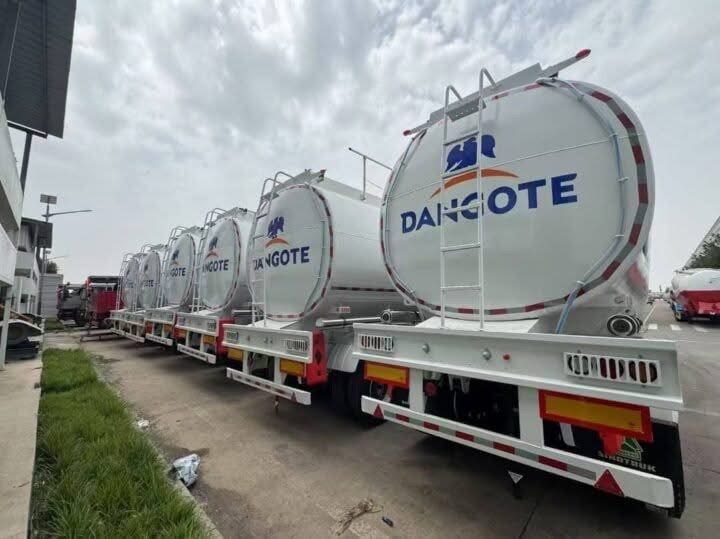

The Dangote Petroleum Refinery has increased its gantry prices for petrol and diesel once more, adding fresh pressure on consumers and businesses across Nigeria.
A senior official at the refinery, who confirmed the development, explained that the adjustment was influenced by global crude oil trends and current market realities.

“The adjustment is in line with global market trends. You are aware of the ongoing tensions in the Middle East and how they have impacted crude oil prices. These are external factors that directly influence refined product pricing,” the official said.
Under the new pricing structure, petrol now sells at N1,275 per litre, marking an increase of N75 (about 5.02%), while diesel has risen by N200 to N1,950 per litre.
“The adjustment is in line with global market trends. You are aware of the ongoing tensions in the Middle East and how they have impacted crude oil prices. These are external factors that directly influence refined product pricing,” he reiterated.
This represents a rise from the previous prices of N1,200 per litre for petrol and N1,750 for diesel, with diesel now edging closer to the N2,000 per litre mark.
“Petrol has been reviewed upward by N75 to N1,275 per litre, which is about a five per cent increase, while diesel has increased more significantly by N200 to N1,950 per litre. These changes reflect the realities of the international market.”
READ ALSO:
- Invest in Nigeria’s Future: Subscribe to the Dangote Refinery IPO Through FirstBank
- Dangote Price Hike Pushes Petrol To N1,395 Per Litre In Lagos
- Labour Party Chieftain Sues UNN Over Peter Obi’s Academic Records
- INEC Releases Final List Of 2027 Presidential Candidates
- Ondo Alcohol Poisoning Death Toll Rises To 30 As 60 Cases Recorded
Data from Petroleumprice.ng also confirmed the adjustment, showing that the latest petrol price reflects a 5.02% increase at the gantry level.
The hike comes at a time when many Nigerians had hoped that domestic refining would help stabilise fuel prices. However, the country still relies heavily on global crude benchmarks, keeping local prices vulnerable to international fluctuations.
Analysts warn that the latest increase could lead to higher pump prices nationwide, as marketers are likely to pass the additional costs on to consumers.
Global oil prices have remained unstable due to ongoing tensions in the Middle East, a region that plays a key role in global crude supply. Any disruption in the area often triggers price increases across international markets.
Despite being an oil-producing nation, Nigeria operates a deregulated downstream sector, meaning fuel prices are largely determined by market forces, including crude prices, exchange rates, and logistics.
The Dangote refinery, Africa’s largest, was expected to ease Nigeria’s dependence on imported fuel and help stabilise prices. However, experts say domestic prices will continue to fluctuate as long as they remain tied to global market conditions.
The latest adjustment adds to growing concerns over rising living costs, with Nigerians already facing increased expenses in transportation and energy.
Economists warn that continued fuel price hikes could worsen inflation and slow down economic growth.