



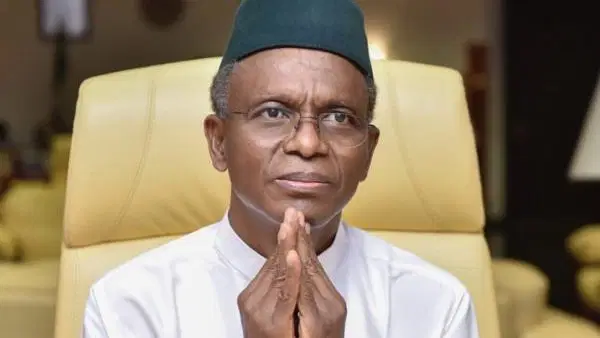

The Independent Corrupt Practices and Other Related Offences Commission (ICPC) has confirmed that former Kaduna State Governor, Nasir El-Rufai, is currently in its custody in connection with an ongoing probe.
The former governor had earlier appeared before the Economic and Financial Crimes Commission (EFCC) on Monday, where he was being questioned on matters now reportedly under ICPC review.

In a statement on Wednesday, signed by the Commission’s Head of Media and Public Communications, Mr. J. Okor Odey, the agency said El-Rufai remained in its custody as of the close of work on February 18, 2026.
“The Commission wishes to state that Malam Nasiru El-Rufai, the former Governor of Kaduna State, is in our custody as at the close of work today, Wednesday, the 18th day of February, 2026,” the statement read.
“He is in the custody of the Commission in connection with ongoing investigations.”
While the ICPC did not provide details about the probe, it noted that updates would be shared in due course, in line with the agency’s mandate and procedures.
El-Rufai, who governed Kaduna State from 2015 to 2023 under the All Progressives Congress (APC), implemented reforms in education, public service, and urban development, though his tenure was marked by controversies surrounding security challenges, restructuring policies, and financial management.
READ ALSO:
- Freed Oyo School Principal Details Airstrikes, Hunger In Kidnappers’ Den
- How Dispute With Okele Put My Million-Naira Movie On Hold – Actor Jimmy Rolland
- Anambra Student Hostel Collapses, Trapping Occupants
- Peter Obi: I’ll Unite Nigeria, Not Divide It If Elected President
- BBNaija S11: Meet The 24 Housemates Entering The ‘Show Ya Sef’ House
Before serving as governor, El-Rufai held several prominent positions, including Minister of the Federal Capital Territory from 2003 to 2007, and has remained an influential voice in national politics since leaving office.
Established in 2000, the ICPC is tasked with investigating and prosecuting corruption and abuse of office in Nigeria’s public sector. In recent years, the Commission has intensified scrutiny of both serving and former officials as part of broader anti-corruption efforts.
At the time of reporting, neither El-Rufai nor his associates had issued a statement regarding his detention.
Observers suggest that the outcome of the ICPC investigation could have significant political implications, given El-Rufai’s continued prominence in national affairs.
The Commission reiterated its commitment to due process, stating, “The Commission remains guided by the rule of law and assures the public that investigations are being conducted professionally and without prejudice.”