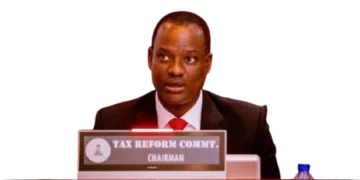




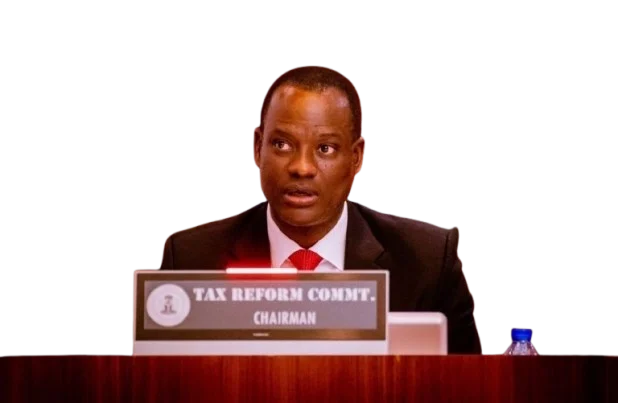

The Federal Government has reaffirmed its commitment to implementing the Nigeria Tax Act and Tax Administration Act on January 1, 2026, despite concerns over alleged discrepancies in the gazetted versions of the laws.
Taiwo Oyedele, Chairman of the Presidential Fiscal Policy and Tax Reforms Committee, spoke after briefing President Bola Tinubu in Lagos, emphasising that the reforms are intended to provide relief to Nigerians rather than generate immediate revenue.

“The plan to commence the new law, the two remaining new laws on the first of January 2026, will go ahead as planned, on schedule, because these reforms are designed to provide relief to the Nigerian people,” Oyedele told journalists.
His statement followed the National Assembly’s directive to re-gazette the four tax reform laws after public outcry over alleged alterations between the versions passed by lawmakers and those published in the Official Gazette.
Oyedele highlighted the reforms’ potential to ease the tax burden for the majority of Nigerians.
“Bottom 98 per cent of workers will see either no pay tax or lower taxes to be paid. Small businesses, 97 per cent of them, will be exempted from corporate income tax, VAT, withholding tax, and large businesses will see a drop in the taxes that they paid,” he said.
He added that the reforms aim “to try and promote economic growth, inclusivity as well as shared prosperity for our people,” expressing optimism about the January 1 rollout.
Oyedele also assured that the government has been preparing for the implementation since October 2024, when the bills were first submitted to the National Assembly.
READ ALSO:
- ‘Leave My Family Alone’ — Woman Accuses Irewole Olaniyan Of Affair With Husband
- Lagos Varsity Workers Declare Strike Over Unpaid Nine-Month Salary Arrears
- Imo Abductions: IGP Deploys DIG To Lead Rescue Of 20 NYSC Prospective Members
- Amaechi: Rising Drug Costs Under Tinubu Contributed To My Mother’s Death
- 15 Villagers Killed In Fresh Boko Haram Attack In Borno
“The tax reform bills were at the National Assembly for nine months, from October 2024, until June 2025, and that for us, preparation started from day one, and since the laws were signed, we’ve also had now about six months in which we’ve been doing preparation, capacity building, system upgrade and sensitization,” he said.
Acknowledging that reforms are “work in progress,” Oyedele noted, “You never get to perfection. You get better as you go along. So we believe that we are at a point already.” He added that two of the four laws—the Nigeria Revenue Service Establishment Act and the Joint Revenue Board Establishment Act—commenced on June 26, 2025, to allow the institutions time to prepare for full implementation.
“The plan, the intention for this tax reform, is not immediate revenue generation. We believe that over time, you get revenue from growth. When the economy is growing, people pay not because tax rate has gone up, but because the base has increased,” he said.
Oyedele outlined three ways the reforms would increase revenue over time: expanding the tax base through economic growth, rationalising distortionary incentives, and improving compliance via greater awareness of tax culture.
The implementation plan comes amid controversy over alleged alterations to the laws after presidential assent. Rep. Abdussamad Dasuki (Sokoto) raised concerns that the gazetted copies included provisions not passed by the National Assembly, such as coercive powers, garnishment without court order, compulsory USD computation, and appeal security deposits.
In response, the National Assembly directed its Clerk to re-gazette the laws and issue Certified True Copies reflecting the versions passed by both chambers.
“This administrative step is intended solely to authenticate and accurately reflect the legislative decisions of the National Assembly,” said House spokesman Akin Rotimi. The House emphasised that the review “does not constitute, imply, or concede any defect in the exercise of legislative authority by the House of Representatives or the Senate.”
An Ad Hoc Committee chaired by Muktar Betara (APC, Borno) has also been set up to investigate the sequence of events surrounding the passage, presidential assent, and gazetting of the tax laws.